

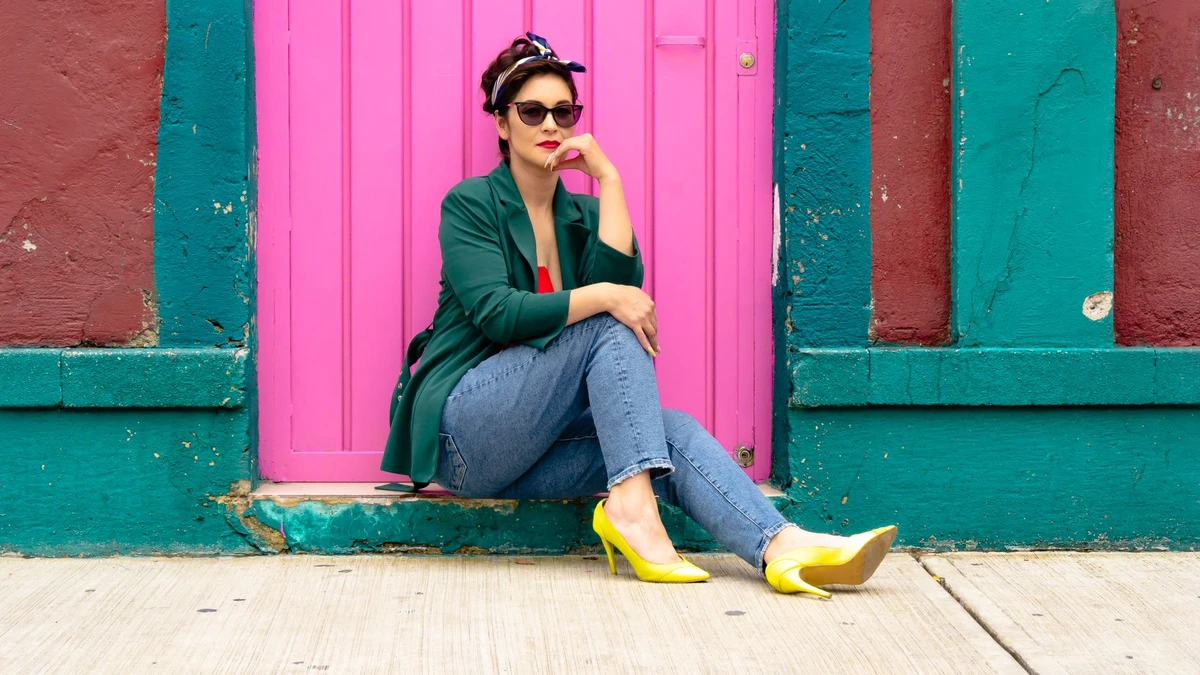
The Core Idea
Wearing bold colors does not have to mean building an outfit around several loud pieces. The goal is not to look as colorful as possible; it is to make one strong shade feel intentional, balanced, and connected to the rest of your wardrobe.
That distinction matters because bright clothing can quickly feel costumey when every element competes for attention. A saturated orange jacket with a neon green top, dramatic accessories, and high-contrast shoes may be visually exciting on a runway, but it can feel disconnected in everyday life. The problem is usually not the color itself. It is the lack of hierarchy. When nothing in the outfit tells the eye where to look first, the result can seem more like a costume than personal style.
A more practical approach is to treat bold color as the focal point of an outfit. Choose one piece or one color family to lead, then let the remaining items provide quiet support. Neutrals such as denim, cream, black, gray, camel, and chocolate brown can create useful space around a vivid shade. Softer textures and simple silhouettes can do the same. This allows the color to make an impression without requiring every detail to be equally dramatic.
The idea also applies when you are combining bright colors. Two strong shades can work together if they have a clear relationship, such as similar intensity, a pleasing contrast, or a shared undertone. For example, cobalt and tomato red can look deliberate when the shapes are simple and one color is used in a smaller dose. Lavender and chartreuse may also work, but the outfit benefits from restraint elsewhere. The more noticeable the color combination, the more useful clean lines and minimal accessories become.
This balance is important because confidence often comes from feeling in control of what you are wearing. If an outfit feels too theatrical, you may spend the day adjusting it, second-guessing it, or avoiding situations where you would normally feel comfortable. A considered color strategy solves that problem without asking you to retreat into an entirely neutral wardrobe.
Think of bold color as a styling tool rather than a personality test. You do not need to be naturally flamboyant, follow every trend, or wear bright shades from head to toe. Start with a single colorful element—a knit, trouser, shoe, bag, or jacket—and build the outfit around its visual weight. The aim is an outfit that feels expressive but still believable for your daily life. That is what keeps strong color modern, wearable, and distinctly yours.
What to Look For
When deciding whether a bright piece will feel polished or costumey, look for balance rather than a strict list of color rules. The most useful signals are the relationship between the dominant color, the outfit’s proportions, and the overall level of visual detail.
1. Check the color’s intensity
Not all bold colors make the same statement. A deep cobalt blazer, tomato-red sweater, and fluorescent lime shirt may all be vivid, but their intensity affects how much support they need from the rest of the outfit.
Highly saturated or neon shades usually work best with quieter companions. For example, pair a fluorescent yellow top with charcoal trousers, cream denim, or medium-wash jeans rather than another equally bright color. A rich emerald skirt can handle more visual interest because it feels deeper and less fluorescent. If the color is soft but unusual—such as dusty lilac or muted rust—you may have more freedom to combine it with prints, texture, or a second accent.
A useful test is to ask whether the color attracts attention because of its brightness or because of its depth. Brightness calls for restraint; depth can often support more complexity.
2. Identify the outfit’s focal point
A successful look usually has one clear visual anchor. This might be a bright coat, a pair of vivid trousers, colorful shoes, or a striking handbag. Everything else should help frame that item instead of competing with it.
For instance, red trousers can become the focal point when worn with a simple ivory knit and understated brown loafers. If you add a patterned blouse, metallic belt, and red statement earrings, the eye has several competing destinations. The individual pieces may be attractive, but the outfit loses direction.
When wearing bold colors, look at the outfit from a distance or take a quick phone photo. The first item you notice should be the piece you intended to emphasize.
3. Compare the color with the outfit’s structure
Color feels more sophisticated when the garment itself has a clear shape. A bright tailored blazer, clean-lined skirt, or structured knit often looks intentional because its silhouette provides order. The same shade in a heavily ruffled, sequined, or overly decorative garment may create a stronger costume effect.
This does not mean bold color belongs only on minimalist clothing. It means that color and detail should have a visible relationship. If the garment is dramatic in both shape and shade, keep the accessories simple. If the shape is relaxed and basic, you can introduce interest through texture or a distinctive shoe.
4. Look for a connecting element
The outfit should contain at least one quiet link between the bold piece and the rest of the look. That link might be a repeated undertone, similar material, or familiar neutral. A bright blue bag can feel integrated when its cool tone echoes blue-gray denim. Orange heels may look more natural with warm beige, tan leather, or gold jewelry nearby.
These small connections make the color appear chosen rather than random, which is often the difference between expressive and costumey.
A Practical Approach
The easiest way to make a bold color feel intentional is to build the outfit in stages rather than choosing every piece at once. This gives you control over the balance and makes it easier to stop before the look becomes overly theatrical.
1. Start with one dominant color
Choose the bright piece you want to feature first. It might be a cobalt jacket, a vivid green skirt, or a pair of red trousers. Treat this item as the visual focus of the outfit, then let everything else support it.
This decision prevents the look from competing with itself. If you are new to wearing bold colors, begin with a piece you already feel comfortable wearing in terms of shape and fit. A familiar silhouette makes an unusual color feel less intimidating.
2. Add a quiet foundation
Next, choose a neutral base that gives the color somewhere to land. Black, white, cream, denim, gray, camel, and chocolate brown are reliable options, but they do not all create the same mood. White and cream feel fresh, black feels sharper, denim feels relaxed, and brown or camel can make a vivid shade look warmer.
The foundation should also be simple in construction. If your bright item has a strong color and an unusual shape, avoid adding ruffles, elaborate tailoring, or multiple statement details elsewhere. Simplicity helps the color look modern rather than themed.
3. Check the proportions
Before adding accessories, look at the outfit from a distance. Is the bright color concentrated in one area, or does it appear in a way that helps the silhouette feel balanced? A colorful oversized blazer may need streamlined trousers or a simple skirt underneath. Bright wide-leg pants may work best with a neat top that keeps the upper half visually contained.
This is not about making every outfit symmetrical. It is about giving the eye a clear path through the look. When both the color and the proportions are dramatic, the result can feel more like a costume than everyday clothing.
4. Repeat the color only if it helps
A small echo of the main shade can make the outfit feel connected, but repetition is optional. You might pick up a red jacket with lipstick, a handbag, or a narrow stripe in a scarf. Keep the repeat subtle; matching every accessory usually makes the styling look overly planned.
If the outfit already feels balanced, leave it alone. One strong color often has more impact than several coordinated accents.
5. Add accessories last
Choose shoes, jewelry, and a bag after the main outfit is complete. Neutral accessories are the safest choice, but metallics, tortoiseshell, or muted shades can also work if they do not introduce another competing focal point.
Finally, try the outfit on in natural light and take a quick photo. The image often reveals whether the color feels integrated or simply placed on top of the clothes. If it looks too loud, remove one detail before changing everything. A simpler version is usually the most polished.
Common Mistakes to Avoid
Bold color usually feels costumey when the outfit looks overly deliberate in the wrong way. The problem is not necessarily that the shade is too bright. More often, several small choices make the look seem like a themed costume rather than something you would naturally wear.
Mistake 1: Matching every detail too precisely
A bright dress with shoes, bag, jewelry, and makeup in the exact same shade can look more like a performance outfit than everyday clothing. Perfect color matching removes the variation that makes an outfit feel personal and relaxed.
Instead, use related tones rather than identical ones. A scarlet dress might work with burgundy shoes, a tan bag, or gold jewelry. If you are unsure, remove one matching accessory and replace it with something neutral. The outfit should still feel complete without color repetition everywhere.
Mistake 2: Ignoring the visual weight of the fabric
The same color can communicate very different things depending on its material. A vivid satin blouse, glossy patent shoes, and metallic bag may create too much shine, even if the colors themselves are well chosen. On the other hand, a bright shade in denim, cotton, knitwear, or brushed wool often feels more approachable.
Before leaving the house, check the outfit under natural light. Look for how many surfaces reflect light and how many absorb it. If every piece has a sheen, switch one item for a matte alternative. This simple adjustment can make a dramatic palette look considerably more modern.
Mistake 3: Choosing intensity without considering your features
Some people select a color because it is fashionable, then feel uncomfortable because the shade overwhelms their complexion or clashes with their usual styling. Discomfort often leads to constant adjusting, which makes even a well-designed outfit appear uncertain.
Hold the garment near your face in daylight and notice what draws attention first: your features or the fabric. If the color dominates completely, wear it farther from your face as trousers, shoes, or a bag. You do not have to abandon a strong shade; you can change its position.
Mistake 4: Treating accessories as an afterthought
A colorful outfit can lose its polish when the accessories belong to a completely different visual mood. A delicate, romantic dress paired with heavy athletic sneakers may look accidental unless that contrast is clearly intentional. Likewise, formal accessories can make casual clothes feel theatrical.
Use a quick context test: ask whether each accessory belongs to the same occasion as the main garment. If one item feels noticeably more formal, playful, or sporty, replace it with a quieter option. This is especially useful when wearing bold colors, because the palette already provides plenty of visual interest.
Mistake 5: Adding more because the outfit feels unfamiliar
New color combinations can feel “unfinished” simply because they are unfamiliar. Adding another statement piece usually makes the result less cohesive, not more complete. Take a photo before making final changes, then wait a few minutes and look at it from a distance. If the main color is clear and the outfit feels comfortable, stop there. Restraint is often what keeps confidence from turning into costume.