

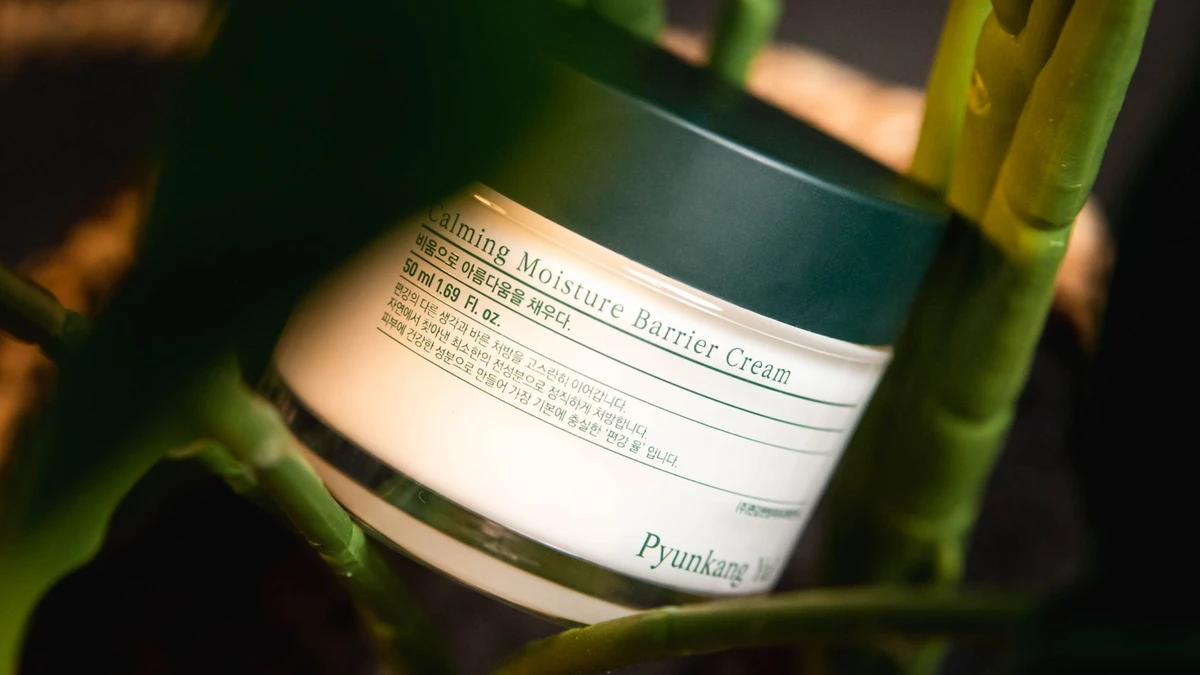
The Core Idea
In beauty conversations, “barrier repair” refers to supporting the skin barrier—the outermost layer of the skin that helps keep moisture in and irritants out. It is not a single product, ingredient, or overnight treatment. Instead, it describes a care approach for skin that has become dry, tight, rough, unusually sensitive, or prone to stinging.
The skin barrier is made up of skin cells and protective fats, including ceramides, cholesterol, and fatty acids. Together, they help regulate water loss and create a buffer between your skin and the outside world. When that structure is disrupted, the skin may lose moisture more quickly and react more easily to products, weather, friction, or environmental stress.
That disruption can happen for many ordinary reasons: using too many active ingredients, cleansing too aggressively, exfoliating too often, taking long hot showers, shaving, experiencing cold or dry weather, or simply having naturally sensitive skin. A damaged-feeling barrier can also be associated with conditions such as eczema or rosacea, although skincare alone cannot diagnose or treat those concerns.
This is the practical barrier repair meaning: reduce unnecessary stress on the skin while replenishing hydration and reinforcing its protective surface. The goal is not to create an impenetrable layer or eliminate every blemish. It is to help the skin become more comfortable, balanced, and resilient over time.
That distinction matters because “barrier repair” has become a broad marketing phrase. A product labeled for barrier support may be a rich moisturizer, a gentle cleanser, a serum containing humectants, or a formula featuring ceramides and other skin-identical lipids. But the label does not guarantee that it is right for every person. A heavy cream may feel soothing on dry skin yet uncomfortable or congesting on someone prone to breakouts. Similarly, adding several new products at once can make it harder to tell what is helping—or what is causing irritation.
For most readers, the promised outcome is simpler than a complete routine overhaul: recognize when skin needs less intensity and more consistency. That may mean pausing strong acids or retinoids, washing with lukewarm water, applying moisturizer to slightly damp skin, and using sunscreen during the day. The emphasis is on restoring comfort and reducing avoidable irritation, not chasing a trend with an ever-growing shelf of products.
If burning, swelling, cracking, persistent redness, or severe itching continues, professional medical advice is more appropriate than experimenting with additional skincare. Barrier-focused care can support everyday skin health, but it is not a substitute for treatment when an underlying condition may be involved.
What to Look For
When evaluating a “barrier repair” product or routine, start with your skin’s current signals rather than the trendiest ingredient list. Skin that feels tight after cleansing, stings when you apply familiar products, flakes in small patches, or looks unusually rough may be asking for less stimulation and more support. These signs do not prove that the barrier is damaged—similar symptoms can have other causes—but they are useful clues that your routine may be too drying or complicated.
The most important factor to compare is how gentle the routine is overall. Look for a cleanser that removes sunscreen, makeup, and excess oil without leaving your face squeaky or uncomfortable. A mild, fragrance-free formula may be easier to tolerate than a foaming cleanser with a strong after-feel. If cleansing twice a day makes your skin feel tight, reducing frequency or using lukewarm rather than hot water may matter more than adding another treatment.
Next, examine the moisturizer’s supporting ingredients. Ceramides, glycerin, hyaluronic acid, panthenol, squalane, and petrolatum can help hydrate, soften, or reduce water loss, although no single ingredient guarantees results. A lightweight lotion may suit combination skin, while a cream or balm can be more comfortable for very dry areas. The best choice is the one that leaves skin calm and comfortable without causing congestion or irritation.
Also check what the product does not contain, at least while your skin is reactive. Fragrance, essential oils, strong exfoliating acids, retinoids, and high-strength vitamin C can be useful in some routines, but introducing several at once makes it difficult to identify a trigger. Packaging claims such as “restores,” “strengthens,” or “barrier-boosting” are less meaningful than a short ingredient list, clear directions, and a texture you will use consistently.
The practical meaning of barrier repair becomes clearer when you compare your skin before and after simplifying. Are stinging and tightness decreasing? Does moisturizer remain comfortable for longer? Are dry patches becoming less noticeable without new bumps or redness? These are more useful signals than an immediate glow or a dramatic overnight transformation.
Finally, consider timing and context. A sudden reaction after a new product, persistent redness, cracking, swelling, or painful itching may need professional assessment rather than more skincare experimentation. Look for steady improvement over days or weeks, and treat comfort, tolerance, and consistency as the main criteria.
A Practical Approach
A simple barrier-supporting routine usually works better than a dramatic reset. The goal is to reduce unnecessary stress on the skin, add comfortable hydration, and give your routine enough time to show whether it is helping.
1. Pause the most irritating steps first. For several days, set aside products that commonly create extra stimulation: exfoliating acids, scrubs, retinoids, strong acne treatments, fragranced formulas, and frequent masks. You do not necessarily need to abandon these ingredients forever. The decision is about reducing variables while your skin feels tight, rough, or reactive. If you keep adding new products, it becomes difficult to tell what is improving the situation—or making it worse.
2. Keep cleansing gentle and proportionate. Cleanse at night to remove sunscreen, makeup, and daily buildup. In the morning, rinsing with lukewarm water may be enough if your skin is dry or uncomfortable. Avoid hot water, vigorous rubbing, and the idea that skin must feel “squeaky clean.” That tight sensation is not proof of effectiveness; it can be a sign that cleansing is too aggressive for your current needs.
3. Apply moisturizer while skin is slightly damp. Choose a plain, fragrance-free moisturizer with a texture you will actually use. Ingredients such as glycerin, ceramides, cholesterol, fatty acids, panthenol, or squalane may support comfort, but the full formula matters more than one fashionable ingredient. Applying moisturizer soon after cleansing can help reduce water loss and make the routine feel less harsh.
4. Protect the progress. Use sunscreen during the day, especially if you are spending time outdoors or have recently used exfoliating or retinoid products. Sun exposure can add another source of irritation, while a gentle cleanser at night helps remove sunscreen without repeated scrubbing. Soft towels, clean hands, and avoiding unnecessary picking also matter more than they sound.
5. Reintroduce products one at a time. Once your skin feels consistently comfortable, bring back only one paused product. Use it less often than before and watch for renewed stinging, redness, flaking, or persistent dryness. If symptoms return, remove that product again rather than adding several “soothing” products to compensate.
This is the practical barrier repair meaning: not a race to collect repair-focused formulas, but a gradual process of reducing irritation and rebuilding a routine your skin can tolerate. If burning, swelling, severe redness, cracking, or a rash continues, stop experimenting and seek advice from a qualified healthcare professional.
Common Mistakes to Avoid
One common mistake is treating every sign of discomfort as proof that the skin barrier is damaged. Tightness, flaking, redness, burning, and breakouts can all appear when skin is stressed, but they can also point to acne treatment irritation, eczema, contact dermatitis, rosacea, or an allergy. The barrier repair meaning is often simplified online, which can encourage people to label any skin problem the same way. That can delay the right care.
Correction: Look for patterns rather than relying on one symptom. Notice when the discomfort began, which areas are affected, and whether it follows a particular product or activity. If swelling, hives, intense itching, spreading redness, painful cracks, or persistent symptoms are involved, stop experimenting and seek advice from a dermatologist or qualified healthcare professional.
Another mistake is choosing the richest, most occlusive formula available and assuming heavier is automatically better. A thick balm may feel comforting on very dry skin, but it can feel congested, uncomfortable, or overly warm on acne-prone or humid-weather skin. Some formulas also contain fragrance, essential oils, or botanical extracts that make reactive skin less comfortable.
Correction: Judge a product by how your skin feels after several hours and the next morning, not by its texture in the jar. A supportive moisturizer should reduce tightness without creating new burning, itching, or clusters of bumps. Try a small area first, especially when introducing a formula with multiple unfamiliar ingredients.
It is also easy to mistake instant sensation for long-term improvement. A cooling product may feel soothing temporarily, while a tingling acid or strongly scented formula may seem active and effective. Neither reaction proves that the skin is recovering. Conversely, a simple moisturizer may feel unremarkable while quietly reducing dryness over time.
Correction: Use practical measures: less tightness after cleansing, fewer rough patches, reduced sensitivity to water or basic products, and more consistent comfort across the day. Take a quick note every few days instead of judging the routine after one application.
Finally, avoid turning “barrier repair” into a permanent excuse to avoid all effective skincare. Once the skin is comfortable and stable, reintroduce one active at a time, at a low frequency, and watch for a delayed reaction. If irritation returns, that product, combination, or pace may not suit you right now. The goal is not an endless minimalist routine; it is a clearer understanding of what your skin can tolerate.