

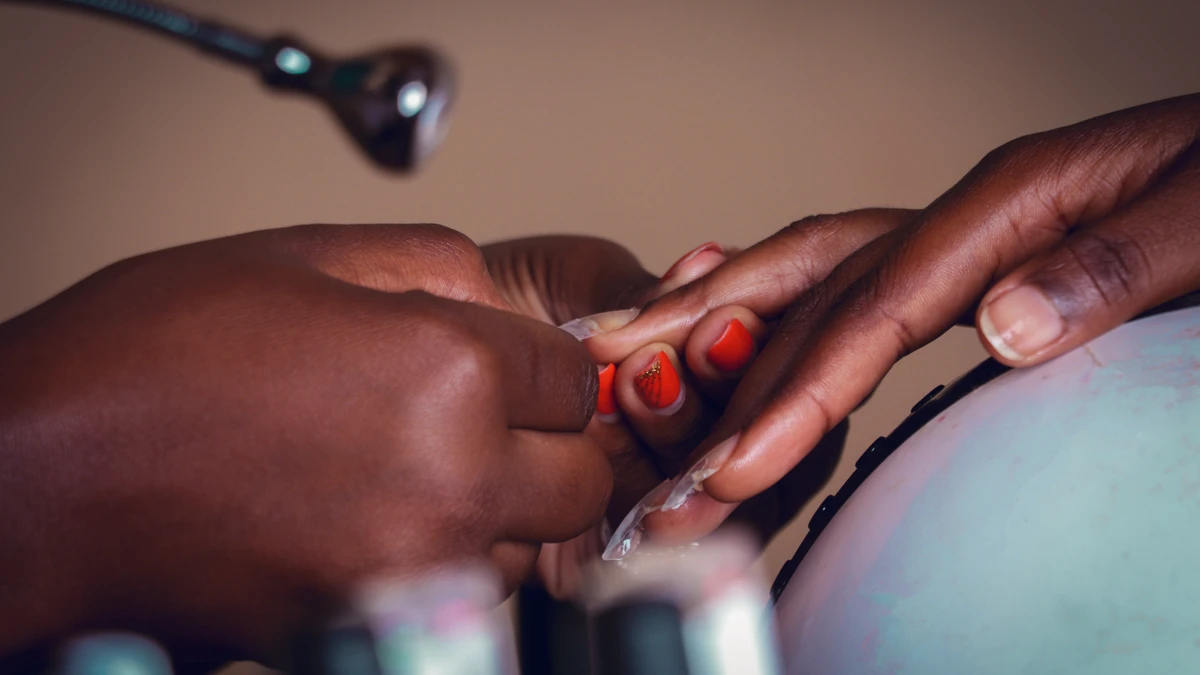
A nail shape can change the apparent proportions of your hands, but there is no single shape that flatters everyone. The useful question is not simply whether oval is better than square. It is whether a shape works with your finger length, nail-bed width, available nail length, and daily routine.
As a quick rule, oval and almond shapes tend to lengthen the look of short fingers and visually narrow wide nail beds. Long fingers can carry almost any shape, including square and squoval, without looking shortened. Those are starting points rather than strict rules. A shape also has to be practical for the strength and length of your natural nails.
This guide focuses on matching shape to hand and nail proportions. It does not attempt to cover nail art, polish colors, extension systems, or detailed manicure technique, except where they affect the shape you can realistically wear.
The quick answer by hand and nail type
If you want a straightforward recommendation, start here:
| Your main consideration | Shapes most likely to work | Why they work | Potential drawback |
|---|---|---|---|
| Short fingers | Oval, soft almond, rounded squoval | Curved or tapered edges create a longer visual line | Almond needs some free-edge length |
| Long fingers | Squoval, square, oval, almond | Longer fingers can support both blunt and tapered tips | Very long pointed nails may exaggerate length |
| Wide nail beds | Oval, almond, tapered squoval | A narrower tip reduces the emphasis on width | Over-tapering can weaken the sidewalls |
| Short natural nails | Round, short oval, squoval | These shapes work without much length beyond the fingertip | A pronounced almond shape is usually not possible |
| Fragile or frequently splitting nails | Round, squoval | Soft corners are less likely to catch than sharp ones | The effect may be less elongating than almond |
| Strong nails with visible free edge | Oval, almond, square, squoval | Extra length gives you more control over the silhouette | Longer shapes require more maintenance |
The best nail shape is usually the one that balances your proportions without forcing your natural nails into a silhouette they cannot support.
Look at nail beds and finger length separately
People often describe their hands with one label, such as short or wide, but fingers and nail beds contribute different visual information.
Finger length refers to the proportion of the fingers to the palm. Nail-bed width is the side-to-side width of the visible nail plate. You can have short fingers with narrow nail beds, long fingers with wide nail beds, or almost any combination in between.
That distinction matters. Someone with short fingers and naturally narrow nail beds may look balanced in a short squoval shape. Someone with longer fingers but very wide nail beds may prefer oval nails because the tapered outline creates contrast with the width.
Before choosing, look at your bare nails from above and ask:
- Do the nail beds look noticeably wider than they are long?
- Are the sidewalls mostly straight, curved, or flared?
- How much nail naturally grows beyond the fingertip?
- Do corners tend to break or catch?
- Do you want to emphasize length, soften it, or keep the hand visually balanced?
Your answers are more useful than following a rigid rule based on finger length alone.
Best nail shapes for short fingers
For short fingers, oval is the most dependable choice. Its curved tip continues the vertical line of the nail and avoids the strong horizontal edge created by a square shape. Even a modest oval can make the nail plate appear longer.
Almond has a similar effect but produces more taper. The sides narrow gradually toward a softly pointed tip, drawing the eye forward. It can be especially flattering when the nail beds are also wide. However, a recognizable almond shape requires enough free edge to create the taper. Trying to carve almond nails out of very short natural nails often means filing too far into the sides.
If you keep your nails short, choose round or rounded squoval instead. A round nail follows the curve of the fingertip and gives a clean, understated result. A squoval combines a mostly straight tip with softened corners, offering some structure without the width-emphasizing effect of a hard square.
Shapes to approach carefully
A broad square tip can make short fingers look more compact because the straight edge creates a visible stop. That does not make square nails forbidden. If you like them, keep the free edge relatively narrow and soften the corners rather than extending the sides outward.
Extremely long stiletto or coffin shapes can create length, but the contrast may look disproportionate on smaller hands. They also require more upkeep and are often achieved with extensions. For an everyday manicure, a moderate oval or soft almond usually creates a more natural-looking balance.
Best nail shapes for long fingers
Long fingers have more flexibility because they can visually support both curved and angular shapes. Squoval is an especially balanced option: the straighter tip adds a little width, while rounded corners prevent the manicure from looking severe. It is also practical for people who like a neat, medium-short nail.
Classic square nails can work beautifully on long fingers, particularly when the nail beds are narrow. The horizontal tip offsets some of the finger length and creates a crisp silhouette. Square corners can catch on fabric, however, so this shape may need more frequent smoothing.
Oval and almond remain good options when you want to emphasize graceful length. The key is proportion. A very long almond or stiletto can make already-long fingers appear even more elongated. That may be exactly the effect you want, but a shorter oval will look more restrained.
Long fingers with wide nail beds should not choose based on finger length alone. In that combination, a hard square may emphasize the width of each nail. Oval, almond, or a subtly tapered squoval can preserve the hand's length while refining the nail outline.
Best nail shapes for wide nail beds
Wide nail beds generally look more elongated with a shape that narrows toward the tip. Oval is the easiest place to begin because it softens the full perimeter without requiring a dramatic point. The curve can start near the free edge, so you do not have to remove much from the structural sides of the nail.
Soft almond creates a stronger narrowing effect. It works best when the nail has enough length for the taper to happen gradually. A short, sharply filed almond can look pinched and may remove support from the sides.
A tapered squoval is a useful compromise for people who prefer a flatter tip. Instead of keeping the two sides perfectly parallel, file them only slightly inward and round the corners. The finished nail still reads as squoval, but it does not create as much horizontal emphasis as a full square.
Round nails can also suit wide nail beds, especially at a practical short length. The result may not be as visibly lengthening as oval, but it is tidy, durable, and easy to maintain.
Do square nails make wide nail beds look wider?
They can, particularly when the sidewalls remain broad and parallel and the tip is filed straight across. The eye follows that horizontal edge, which reinforces width.
Still, flattering is not an objective rule. A short square manicure can look deliberate and modern on wide nails. If you enjoy that style, you do not need to avoid it. Softening the corners or using a slightly tapered square can make the proportions feel less boxy while preserving the look you like.
What if you have more than one consideration?
Most people fit more than one category, so use the feature you most want to balance as your priority.
- Short fingers and wide nail beds: Try oval first. Soft almond is another strong option if you have enough length.
- Short fingers and narrow nail beds: Oval, round, and short squoval can all work. Narrow nail beds already create a lengthening line, so heavy tapering is unnecessary.
- Long fingers and wide nail beds: Consider oval, tapered squoval, or a medium almond. These shapes refine the width without adding extreme length.
- Long fingers and narrow nail beds: Square and squoval can add visual balance. Oval also works if you prefer a softer look.
- Wide nail beds with very short nails: Choose round or a gently curved squoval rather than forcing an almond point.
For example, consider someone with short fingers, wide nail beds, and nails that break as soon as they extend past the fingertip. Almond may sound like the most flattering recommendation, but round or short oval is the better practical choice. The subtle elongating effect is still there, and the shape does not depend on length the nails cannot maintain.
Nail length can change the recommendation
Shape names can be misleading when length is ignored. A short oval and a long oval do not create the same effect, even though both belong to the same category.
Very short nails naturally support round, squoval, and short square shapes. There is not enough free edge to create a true almond, coffin, or stiletto silhouette without artificial enhancement. Filing deeply into the sides does not create usable length; it only narrows the structural area of the nail.
At medium length, oval and soft almond become easier to form. This is often the most versatile range because there is enough free edge to adjust the silhouette without producing an exaggerated point.
Long nails allow for almond, coffin, and stiletto shapes, but proportion becomes more noticeable. If your fingers are already long, decide whether you want to highlight that length or offset it with a straighter tip.
Choose a shape you can maintain
Visual proportion matters, but daily wear matters more. A theoretically flattering manicure will not stay attractive if the corners chip, the sides split, or the length interferes with your routine.
Round and squoval nails are usually the easiest shapes to maintain because they have no sharp point and few pronounced corners. Oval is also manageable, though maintaining symmetry takes a little more attention. Almond requires regular refinement so that the tip remains centered and both sides taper evenly.
Square nails are structurally straightforward but have corners that may catch. Coffin and stiletto shapes place more importance on length and precision, making them less forgiving as natural nails grow or wear down.
When shaping at home, avoid aggressively filing into the sidewalls simply to make a nail appear narrower. Preserve the sides where they connect to the nail bed, then create most of the taper in the free edge. If one nail grows at an angle, shape for visual balance from above rather than filing each side by exactly the same amount.
Frequently asked questions
Is oval or almond better for short fingers?
Oval is the more versatile choice because it works at short and medium lengths. Almond creates a stronger elongating effect, but it needs enough free edge for a gradual taper. If your nails are short or prone to breaking, oval is usually more practical.
What shape makes wide nails look narrower?
Oval and soft almond are the most reliable options. Both direct the eye toward a narrower tip instead of emphasizing the full width of the nail plate. A subtly tapered squoval can provide a similar effect with a flatter edge.
What shape looks best on long, thin fingers?
Squoval or square can balance long, thin fingers by adding a horizontal line at the tip. Oval and almond also work, but they emphasize length rather than offsetting it. The right choice depends on whether you want balance or extra elongation.
Can short nails be almond shaped?
Only to a limited degree. A true almond shape needs enough nail beyond the fingertip to taper into a soft point. On very short nails, a rounded oval is safer and generally looks more intentional. Extensions can provide the length needed for almond, but they are not required for a flattering manicure.
Should every nail have exactly the same shape?
They should look consistent as a set, but perfect duplication is neither necessary nor always possible. Nail beds often differ slightly from finger to finger. Match the overall outline and apparent length while making small adjustments for each nail's natural growth pattern.
Does polish color affect how a nail shape looks?
Yes, but it does not change the underlying fit. Dark, opaque colors can make the outline more obvious, while sheer shades create a softer transition between the nail and skin. Nail art can also direct the eye vertically or horizontally. Choose the physical shape first, then use color and design to support it.
A simple decision checklist
Choose oval if you want a safe, lengthening option for short fingers or wide nail beds. Choose almond when you want more taper and have enough length to support it. Choose squoval for a durable, balanced shape that suits most hands. Choose square when you like a crisp edge or want to offset long, narrow fingers. Choose round when your nails are short, active, or prone to catching.
Start with the least drastic version of your preferred shape. You can always add more taper at the next manicure, but replacing sidewall strength or lost length takes time. The most successful shape is one that improves the proportions you care about while still fitting the way you use your hands.